Physical Address
Lahore, Pakistan
Physical Address
Lahore, Pakistan
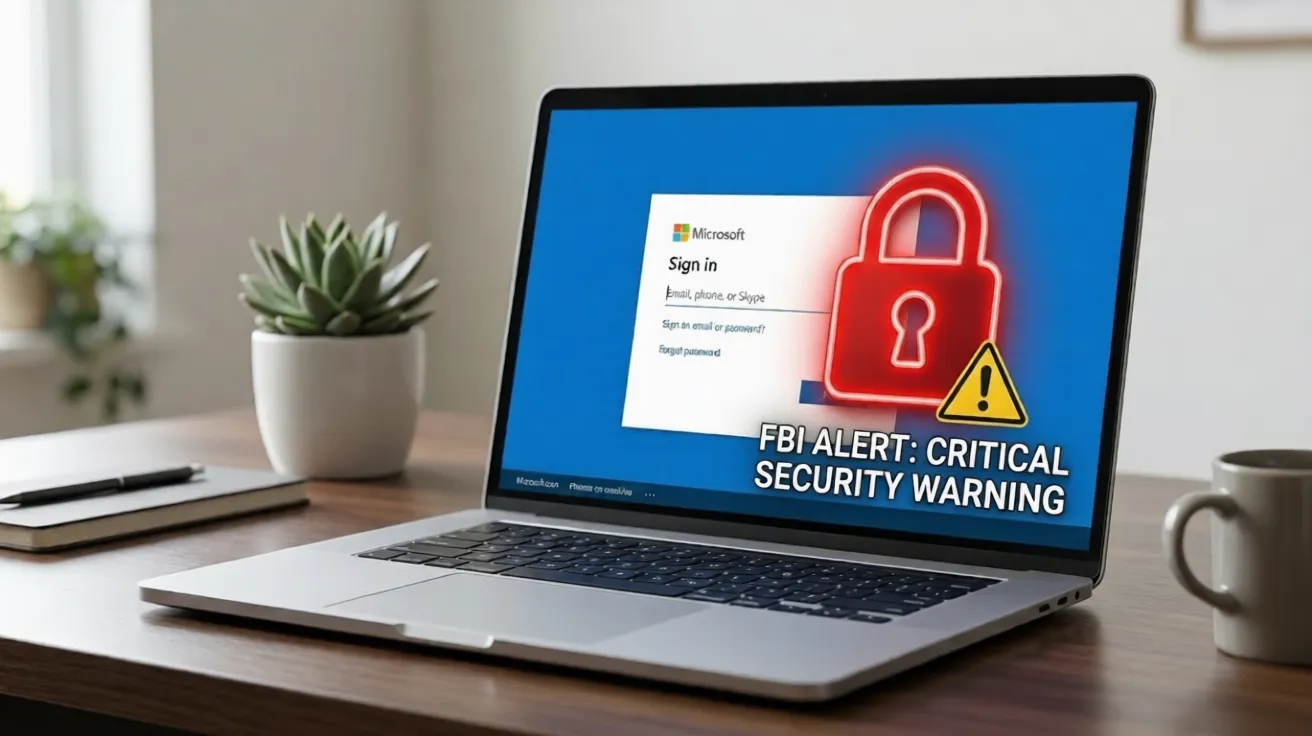
Hey friend! A very urgent and serious update just dropped, and we all need to know about it right away. If you use Microsoft Outlook every single day to check your emails, or if you use OneDrive to save your personal files, college assignments, and photos, this news is going to get your attention.
Just recently, the FBI issued a massive public warning and security alert. In this official warning, they clearly stated that hackers are aggressively targeting Microsoft accounts right now. And do you want to know what the biggest issue is? Your Outlook email and OneDrive cloud storage are connected under the exact same login. This means if a hacker gets into one room, they automatically get the keys to your entire digital life in a split second.
Let’s sit down and talk about exactly what is happening, how these hackers are tricking regular people, and the simple things you can do right now to lock your account down.
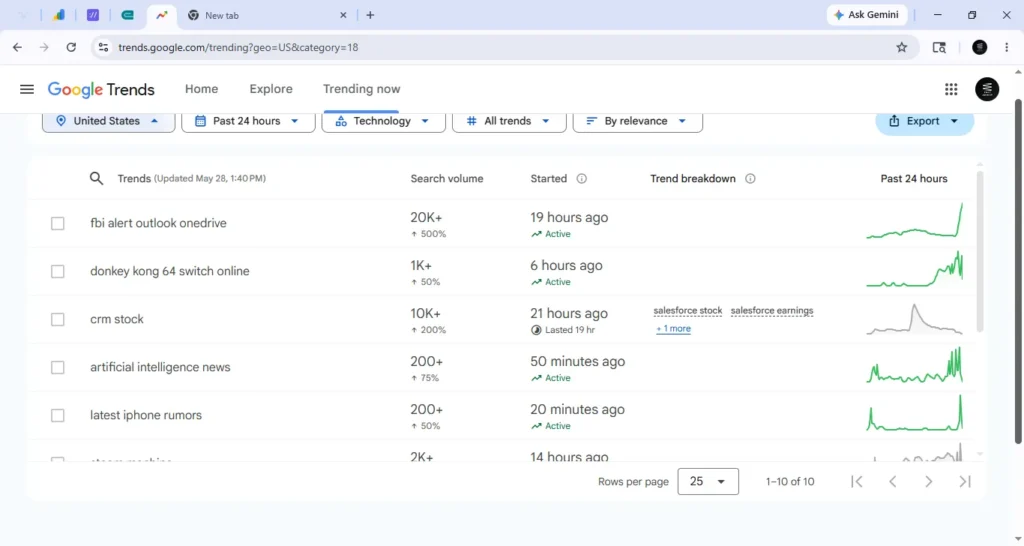
First, let’s look at how things got this bad. Normally, when a small security glitch happens, Microsoft just fixes it quietly in the background with a quick update. But when the FBI has to step in themselves and release a public warning, it means the danger is real, widespread, and growing fast.
The main reason behind this fbi alert outlook onedrive is that hackers aren’t just looking for bugs in the software code this time. Instead, they are focusing on tricking real people. They are using highly convincing setups that make everything look completely normal to an average user, while quietly stealing passwords and cloud backups behind the scenes.
Think about how most of us use the internet. We usually keep the same email and password for almost everything. Because of how Microsoft builds its ecosystem, your Outlook login is the exact same login for your OneDrive cloud storage. When a hacker compromises your inbox, they get a free pass to browse through all your private folders, backup photos, and spreadsheets.
Let’s break down the dirty tricks these hackers are using. The FBI alert points out two specific methods that are causing the most damage across the internet right now.
You receive an email that looks exactly like it came from the official Microsoft support team, or maybe from your university’s IT desk. The subject line usually says something scary like “Your password expires today” or “Storage full, please login to clear space immediately.”
As soon as you click the link inside that email, a page opens up that looks 100% identical to the real Microsoft login page. You type in your email, you type in your password, and just like that, you are caught. Your login details are sent straight to the hacker’s server. This trick is called phishing, and it is the main reason the FBI is tracking this so closely.
This one sounds a bit technical, but it is actually very simple to understand. When you log into Outlook on your laptop web browser, the browser saves a small file called a “session cookie” so you don’t have to type your password every single time you open the tab. Hackers are spreading malicious links that quietly steal these cookies from your browser. The scary part? They don’t even need to guess your password. They just use your stolen session cookie, and Microsoft’s server lets them straight in because it thinks it is actually you.
Now, let’s talk about the absolute worst-case scenario. If someone’s account gets compromised, what kind of damage are we looking at based on this official warning?
Our email inboxes hold a lot of sensitive history. Think about your bank notifications, online shopping receipts, private conversations, and identification details. Once hackers get into your Outlook, they don’t read your emails one by one. They simply use the “Search” bar. They type in hot keywords like Password, Bank, Statement, or Code. This lets them pull up your most critical data instantly to try and break into your financial accounts.
We use OneDrive to backup things we don’t want to lose—important documents, family pictures, or old certificates. Hackers can download your entire history to blackmail you, or worse, they can simply delete everything out of spite. Another growing trend mentioned by security experts is that hackers are finding clean files inside a user’s OneDrive, replacing them with malware, and leaving them there. The next time you open your own saved document, your computer or smartphone gets infected.
Alright, enough with the scary news. Let’s focus entirely on the solutions. If you want to keep your data safe and make sure your access stays secure, you need to follow these quick step-by-step actions immediately:
If you only have a basic password on your account without any backup step, you are taking a massive risk. But wait, just setting up standard SMS text message codes is no longer enough. The FBI clearly warned that smart hackers can easily bypass or intercept text message verification codes.
We often share a link to a folder or file with a classmate or a friend for a quick project, and then we completely forget about it.
This is a sneaky trick a lot of people don’t know about. A hacker logs into an account, sets up a hidden rule that says “Take every new email this person gets and secretly forward a copy to the hacker’s email address,” and then they log out. You keep using your email like normal, thinking everything is fine, while they watch your inbox from a distance.
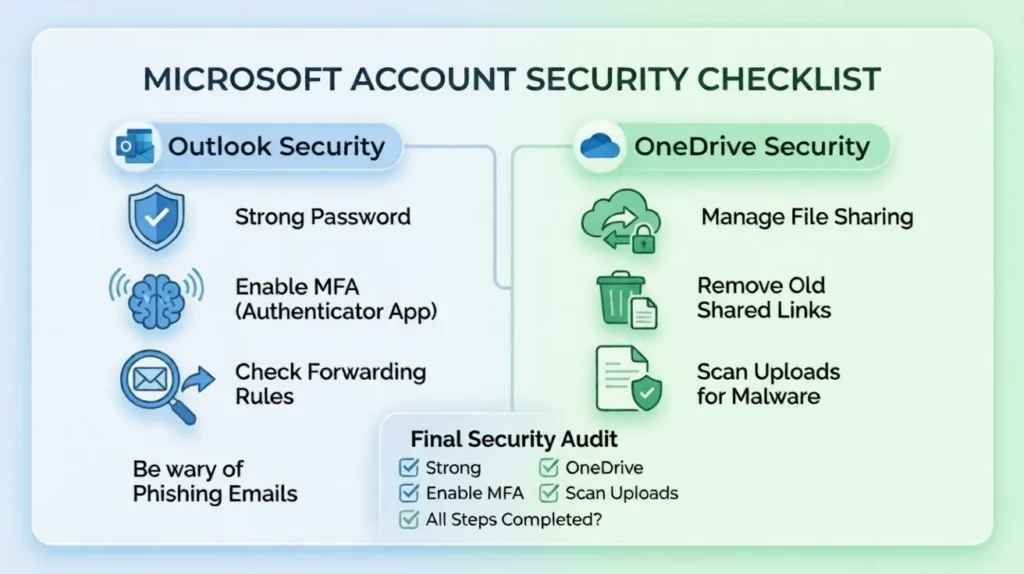
| Action Item | Why It Matters | Time Required |
| Microsoft Authenticator App | Stops hackers even if they find out your password. | 3 Minutes |
| Check Outlook Rules | Makes sure your emails are not being secretly forwarded. | 2 Minutes |
| Clean OneDrive Links | Stops random people from viewing your backup files. | 5 Minutes |
When it comes to staying safe online, forgetting to check your basic settings can cost you heavily. This latest fbi alert outlook onedrive notice isn’t something you should just ignore. Hackers always hunt for the easiest targets—the people who assume, “Oh, nobody is going to bother hacking me.”
Take a few minutes today to change your password to something long and strong, use numbers and symbols, and never click on random links that look weird or rush you to log in. Taking care of your digital space only takes a few minutes, but it saves you from a massive headache down the road.